Telecom And Fiber Conduit Supplier

HDPE conduit, MicroDuct, FuturePath, and PVC transition fittings for telecom and fiber projects that need reliable underground pathways.

Telecom And Fiber Conduit Supplier For Backbone, Metro, And FTTx Projects


Central Conduit supplies HDPE conduit, MicroDuct, FuturePath, and PVC transition fittings for telecom and fiber projects. We support carriers, ISPs, fiber builders, and underground contractors on backbone routes, metro rings, FTTx builds, 5G backhaul, and data center interconnects.

For these projects, HDPE is the backbone. Smoothwall, Smooth Out / Ribbed In, UL 651A sticks, and NEMA TC-7 conduit handle the long runs, directional bores, and congested corridors. PVC shows up at vaults, manholes, central office entrances, and structures where rigid duct banks are required.

We build your telecom package around HDPE as the primary system, then match in PVC elbows, sweeps, and couplers where the spec calls for it. The result is a coordinated HDPE and PVC solution that your engineers and inspectors recognize and your fiber crews can pull through.

Quick Answer For Emergency Telecom Conduit Needs


Central Conduit supplies HDPE conduit, MicroDuct, and FuturePath, plus PVC transition fittings, when routes are already under construction and work windows are booked.

For active routes, we can:

  • Ship HDPE Smoothwall and Smooth Out / Ribbed In in continuous reels or sticks for long pulls.
  • Provide UL 651A listed HDPE conduit used under NEC Article 353 where electrical listing is required.
  • Deliver compatible couplers that join conduits and MicroDuct for air jetting, plow chutes, and directional boring.


If your trench, bore rig, or splicing crews are on the clock and conduit is missing, we treat that as a 911 HDPE problem and respond accordingly.

Quick Answer For Carriers, ISPs, And Fiber Builders

  • We source most telecom HDPE from Dura-Line, including Smoothwall, Smooth Out / Ribbed In, UL 651A sticks, and NEMA TC-7 conduit for standard underground, Innerduct, and congested areas.
  • We provide Dura-Line MicroDuct and FuturePath bundles for high density fiber builds where you want multiple fiber pathways inside a single duct envelope.
  • We pair those HDPE products with PVC sweeps and short runs where rigid duct banks and vault entries are required.
  • We coordinate deliveries around lane closures, night work, traffic control, and joint build schedules so conduit arrives when the bore rig and crews are actually on site.

Why Telecom And Fiber Projects Lean On HDPE

Telecom routes are long, crowded, and expensive to reopen. That is why modern fiber builds lean heavily on HDPE conduit systems:

  • Long continuous pulls where splices cost money and time
  • Directional drilling under roads, rivers, and rail lines
  • Congested urban corridors where you only get one shot at the trench
  • Future expansion, where empty ducts and MicroDuct are worth more than another construction mobilization
  • See more about HDPE conduit on our HDPE conduit page

Dura-Line HDPE conduit is designed for these conditions. Flexible HDPE Smoothwall and ribbed wall products make gradual bends without special fittings, protect cables from shifting ground and rock, and can be supplied in long continuous reels that reduce joint counts.

PVC remains important at manholes, vaults, and building entries, but HDPE is the workhorse that carries fiber across the distance.

Conduit Requirements For Telecom And Fiber Networks

Telecom builds are built around fiber bend radius, cable jetting distance, and route congestion. The conduit system has to support that.

  • Low friction interiors: Smooth Out / Ribbed In and ribbed wall HDPE with internal ribs help reduce friction and enable longer, faster cable jetting runs.
  • Continuous runs: Flexible HDPE and MicroDuct reels allow long continuous pulls with fewer joints, which is ideal for backbone and metro routes.
  • Correct standards: UL 651A listed HDPE when electrical listing and NEC Article 353 use are required, NEMA TC-7 and ASTM based SDR ratings for standard underground and directional drilling applications.
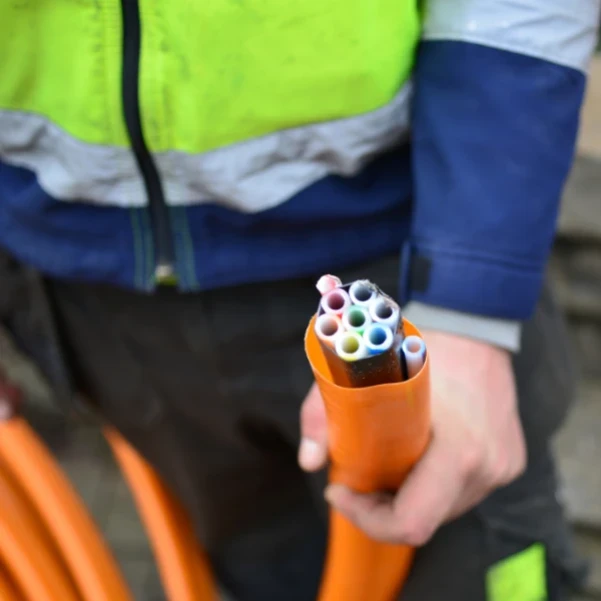
  • Multi-path capacity: MicroDuct and FuturePath bundles allow multiple small conduits under a single oversheath so you can add fiber later without digging again.

Central Conduit maps these Dura-Line HDPE options to your route design. Backbone segments, metro rings, laterals, and vault approaches each get the HDPE or PVC product that matches the spec, installation method, and future growth plan.

SDR and wall thickness for HDPE conduit

HDPE conduit is manufactured in multiple Standard Dimension Ratios (SDR), which is simply the ratio of the pipe diameter to the wall thickness. Lower SDR numbers mean a thicker wall and higher pressure and crush resistance, while higher SDR numbers use less material and are lighter and more flexible.

On telecom and fiber projects, SDR is usually chosen based on:

  • Installation method: directional drilling and deep installations often use lower SDR (thicker wall) for added strength.
  • Soil and load conditions: routes under roads, rail, or heavy traffic usually get thicker walls than grass or shoulder runs.
  • Cable type and jetting plan: some SDRs are preferred for long jetting distances and internal rib profiles.

We work with your spec or engineer of record to select the SDR combinations that match each segment of your route so you are not overbuilding in one area and underbuilding in another.

Conduit Products For Telecom And Fiber Projects
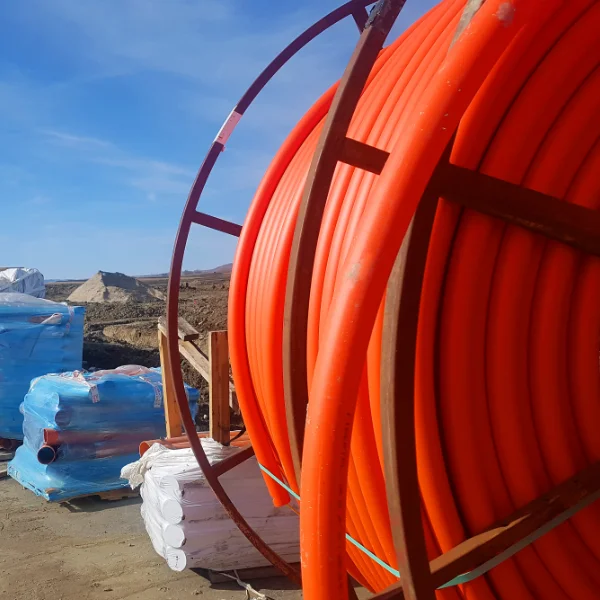
Roll of orange HDPE conduit on job site with pallets of elbows in the background

HDPE Smoothwall, UL 651A, MicroDuct, FuturePath, Smooth Out / Ribbed In

HDPE conduit comes in several styles to match different telecom routes and installation methods, including HDPE Smoothwall, UL 651A listed electrical HDPE, MicroDuct and FuturePath bundled MicroDuct systems, and Smooth Out / Ribbed In designs for lower friction cable pulls. Together these options let you choose the right combination of wall profile, SDR, and internal duct configuration for long backbone runs, directional drilling, dense metro corridors, and future expansion.
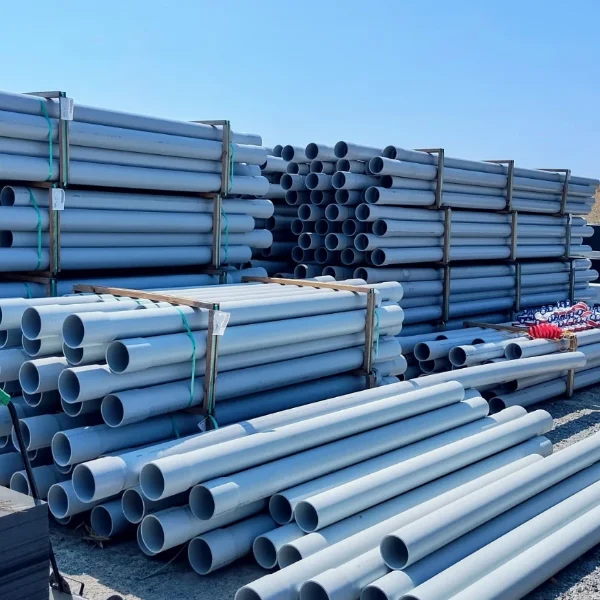
PVC conduit staged on job site waiting for installation

PVC Conduit

PVC is still the preferred material for rigid duct banks into vaults, central offices, POPs, and data centers. We supply Schedule 40 and 80 PVC, elbows, and sweeps at these locations and coordinate the transition from HDPE outside the structure to PVC at the entry and inside the duct bank.

Common telecom trade sizes from 2 in through 6 in, supplied in 10 ft and 20 ft lengths to match your duct bank and vault layouts. On routes that tie into data centers, the same sizes can be used at the entries.
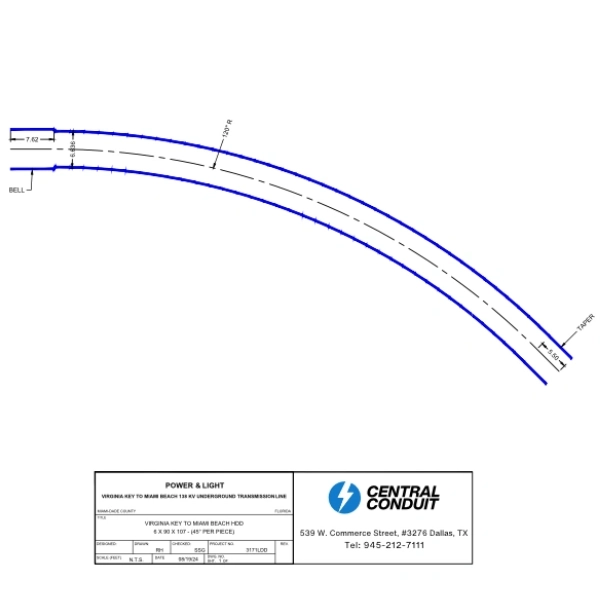
Blueprint drawing of long radius PVC bend

Custom Radius PVC Sweeps

PVC custom radius elbows made in any size, any radius, and any quantity for vault approaches, central office and POP duct banks, and data center interconnects. Shaped to match your cable schedule, we have produced bends up to 150 feet for long runs between substations, hubs, and data halls.

Designed for smooth cable transitions, these bends reduce friction and tension, making wire pulls easier and safer.

Telecom And Fiber Conduit Spec Snapshot

Here is how HDPE and PVC typically line up on a telecom or fiber project.

Central Conduit plans shipments around your build sequence so elbows, conduit, and couplers arrive when the trench, vault, or duct bank is ready. We coordinate with your site team and freight partners to cut down on idle trucks, missed appointments, and crews standing around.

Use caseProductMaterialTypeTypical sizesTypical formatStandards
Backbone and metro fiber routesSmoothwall or Smooth Out / Ribbed InHDPEStandard or ribbed wall1 – 4 inReels or sticksASTM F2160, NEMA TC-7, SDR 11 / 13.5 / 17, UL 651A where required
Long directional boresSmooth Out / Ribbed In, Ribbed In / OutHDPERibbed wall1 – 4 inReelsASTM F2160, NEMA TC-7, SDR 11 / 13.5 for higher strength in HDD applications
Dense fiber corridors and future capacityMicroDucts, FuturePath bundlesHDPEBundled MicroDuct5 – 27 mm OD MicroDuctsMulti-way bundlesEngineered SDR per bundle configuration; internal ribs and lubricated lining optimized for jetting
Vault and manhole approachesPVC conduit and sweepsPVCSch 40 / Sch 802 – 6 in10 ft / 20 ft sticksUL 651, NEMA TC-2 (schedule-based, not SDR)
Data center and central office entriesPVC conduit, sweeps, HDPE transitionsPVC / HDPESch 40 / Sch 80, UL 651A2 – 6 inSticks and transitionsUL 651 (PVC), UL 651A (HDPE), NEC 353; HDPE transition pieces typically SDR 11
HDPE multiduct conduit with multiple inner ducts

Ready To Talk About Your Telecom Fiber Installation Project?

Bring Central Conduit Onto Your Project

  • Meets all UL requirements
  • Approved for use in all government and DOT projects
  • Nationwide Logistics
  • Experience on the nation’s largest infrastructure projects
  • Expedited and emergency procurement services

Standards And Specs For Telecom HDPE

Telecom HDPE has to satisfy both telecom and electrical expectations when it shares corridors with power.

  • Standard HDPE conduit covers Smoothwall, Smooth Out / Ribbed In, ribbed wall, coextruded (co-extruded) and corrugated variants that meet NEMA TC-7 and project specific SDR ratings.
  • UL 651A listed HDPE conduit is ETL tested for use under NEC Article 353 and is manufactured to meet HDPE resin and physical requirements from ASTM D3350.
  • MicroDuct and FuturePath products are built from flexible HDPE with internal ribs and lubricated linings to support high speed cable jetting.

We match these standards to your spec sections so submittals and inspections go smoothly.

Logistics For Live Telecom Projects

Telecom and fiber routes do not move like palletized warehouse freight. You are dealing with reels, sticks, MicroDuct bundles, and couplers that have to arrive in the right sequence for trenching, boring, and pulling.

Central Conduit:

  • Plans HDPE reel and stick shipments around segment length, route phasing, and work windows.
  • Coordinates delivery equipment for reels, including flatbeds and Conestoga where needed.
  • Stages shipments by route segment so you do not flood tight urban laydown with material you cannot move.
  • Times deliveries around lane closures, night work, and railroad windows so crews can install instead of babysit trucks.

Telecom and Fiber Conduit FAQ

Most modern telecom projects use HDPE conduit for the long runs and PVC at structures and vaults. HDPE Smoothwall and ribbed wall products in 1 to 4 inch sizes handle backbone, metro, and access routes in reels or sticks, while PVC is used for rigid duct banks and entries into manholes, central offices, and data centers.

Use MicroDucts and FuturePath when you want multiple independent fiber pathways under a single oversheath or when you expect to add fiber in future phases. Each MicroDuct is its own pathway, and FuturePath factory bundles multiple MicroDucts so you can install several ducts in one operation. That is ideal for dense corridors, campus networks, and routes where reopening the street later would be painful.

Lead times depend on size, SDR, and configuration. Common HDPE sizes in standard SDRs often ship in days, not weeks. Specialty MicroDuct and FuturePath configurations can take longer because they are more engineered. When you request a quote, we will give you realistic lead times by item so you can align orders with your construction schedule.

SDR choice is mainly about installation method and loading. For directional drilling, deeper cover, or heavy traffic, engineers often choose lower SDR numbers like SDR 11 or 13.5 for thicker walls and higher strength. For shallow routes or light loading, SDR 17 may be acceptable. We match SDR to your spec and route conditions so you are not overbuilding or underbuilding each segment.

Use reels when you want long continuous runs with minimal joints, especially for plowing or directional drilling. Use sticks when storage space is tight, when you have short segments between structures, or when the spec requires UL listed sticks that install like rigid conduit. We can quote both formats so you can decide segment by segment.

Yes. When your conduit falls under NEC Article 353 or your spec requires UL listed nonmetallic conduit, we can supply HDPE that is listed to UL 651A and tested for that use. This is common near power infrastructure, at shared duct banks, and in some substation or data center tie ins.

We use compatible transition fittings and couplers designed to connect HDPE to PVC duct. HDPE covers the long run to the structure, then transitions to PVC at the vault or wall sleeve so you get a rigid, inspector friendly duct bank where it matters and flexible HDPE everywhere else. In some cases, contractors can use BonDuit to join HDPE and PVC conduits.

Yes. We supply couplers and accessories that are matched to their conduit and MicroDuct product lines. That includes inline couplers for standard duct, MicroDuct connectors, and fittings designed for air jetting, plow chutes, and directional drilling. You do not have to mix and match off brand connectors.

MicroDuct and FuturePath let you plan for multiple fibers and future services inside one duct envelope. Instead of a single large duct with one cable, you install a bundle with several MicroDuct. You can pull or jet one cable on day one and leave the other pathways empty for later. That cuts down on future excavation and makes incremental upgrades much easier.

Yes. If you share your existing PVC duct bank layout, route plan, and fiber counts, we can suggest an HDPE and MicroDuct configuration that delivers the same or greater capacity. That often means fewer large PVC ducts at distance and more smaller MicroDuct inside bundled HDPE near the structures and hubs.

Most HDPE and MicroDuct products ship in reel or stick increments, not single piece quantities. We do not have arbitrary “case pack” minimums for telecom customers, but each product has practical minimums based on how it is produced and shipped. Tell us your route lengths and we will size the reels and quantities so you are not drowning in leftover duct.

Yes. Many carriers and fiber builders want a standard playbook for conduit sizes, SDRs, and MicroDuct configurations across multiple cities or regions. We can help design a standard bill of material by route type, then support that standard with repeatable pricing and repeatable logistics across your footprint.

HDPE and PVC have different cost structures. HDPE is often more expensive per foot than basic PVC but can be cheaper per route mile when you factor in fewer joints, faster installation, and better support for jetting. We price both on a cost plus a small, fixed margin model and can show you a side by side comparison for your specific route.

We are not your engineer of record, but we do review telecom bills of material and conduit schedules all the time. We will check for missing couplers, awkward transitions, unrealistic reel lengths, and places where SDR or MicroDuct choices do not match the installation method. The goal is to flag problems while they are still on paper.

On joint builds we pay close attention to standards and listing requirements. That often means using UL 651A listed HDPE or PVC in shared trenches, then standard HDPE or MicroDuct outside those shared areas. We work with your engineering team and the other utilities to specify conduit types that keep each party in compliance without overcomplicating the material list.

How We Build A Telecom And Fiber Conduit Package

  • Send us your schedule or bill of materials for HDPE conduit, sweeps, couplers, and custom radius PVC sweeps in email, PDF, or spreadsheet form
  • Include any phases, sections, or other categorizing information including delivery date requirements
  • We will map the materials to your categorizing requirements
  • You get a conduit package quote with quantities by size, schedule, radius, and required delivery date